
Part 1: Why are they essential? — Part 2: How to install? — Part 3: How to manage?
Area Preparation
Initial vegetation clearing and “cleaning the seed bank” is the most important step to successful establishment. If not done adequately the weed pressure might be extreme. Also, survey the site that you wish to convert to a garden or meadow to see what plants are growing in the vicinity – that might indicate what seeds are in the seed bank. It’s also good to know the land use history on the property.
Go Native! Perennials uses the following methods to prepare sites for gardens and meadows.:
-
Hand Prep, weed pulling, cover with paper and mulch
-
Works for small garden areas
-
Pull weeds, plant, cover area with newspaper or cardboard and mulch to smother weeds; requires vigilance to keep garden weeded
-
Can also seed native annuals heavily between the plants and mulch with straw
-
-
Sod/turf cutting and removal:
-
Quick site preparation: can be cut, seeded/planted all at once
-
Labor intensive and most expensive of all the methods
-
Timing: May/June installation of meadows or anytime May-September for gardens
-
-
Tarping:
-
Timing: Generally requires a full growing season. Tarp in early May, remove in June; retarp in July, remove in August; Plant garden in September, or if intent is to have a meadow retarp in September, remove tarp in November and seed meadow.
-
-
Herbicide: this is an effective method for large sites
-
Timing: site preparation requires a full growing season, with 3 herbicide applications between May and October. Seeding in November.
-
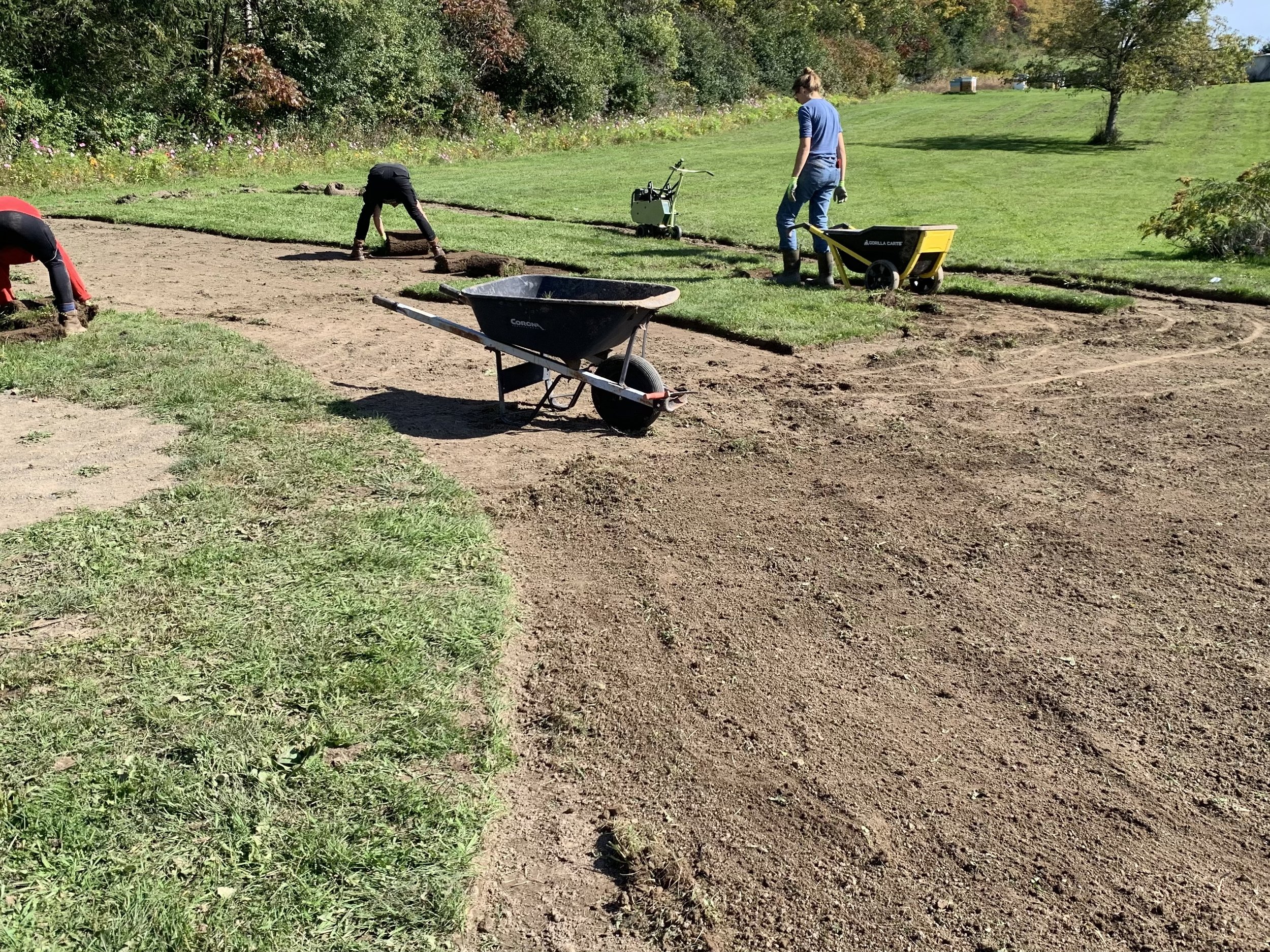


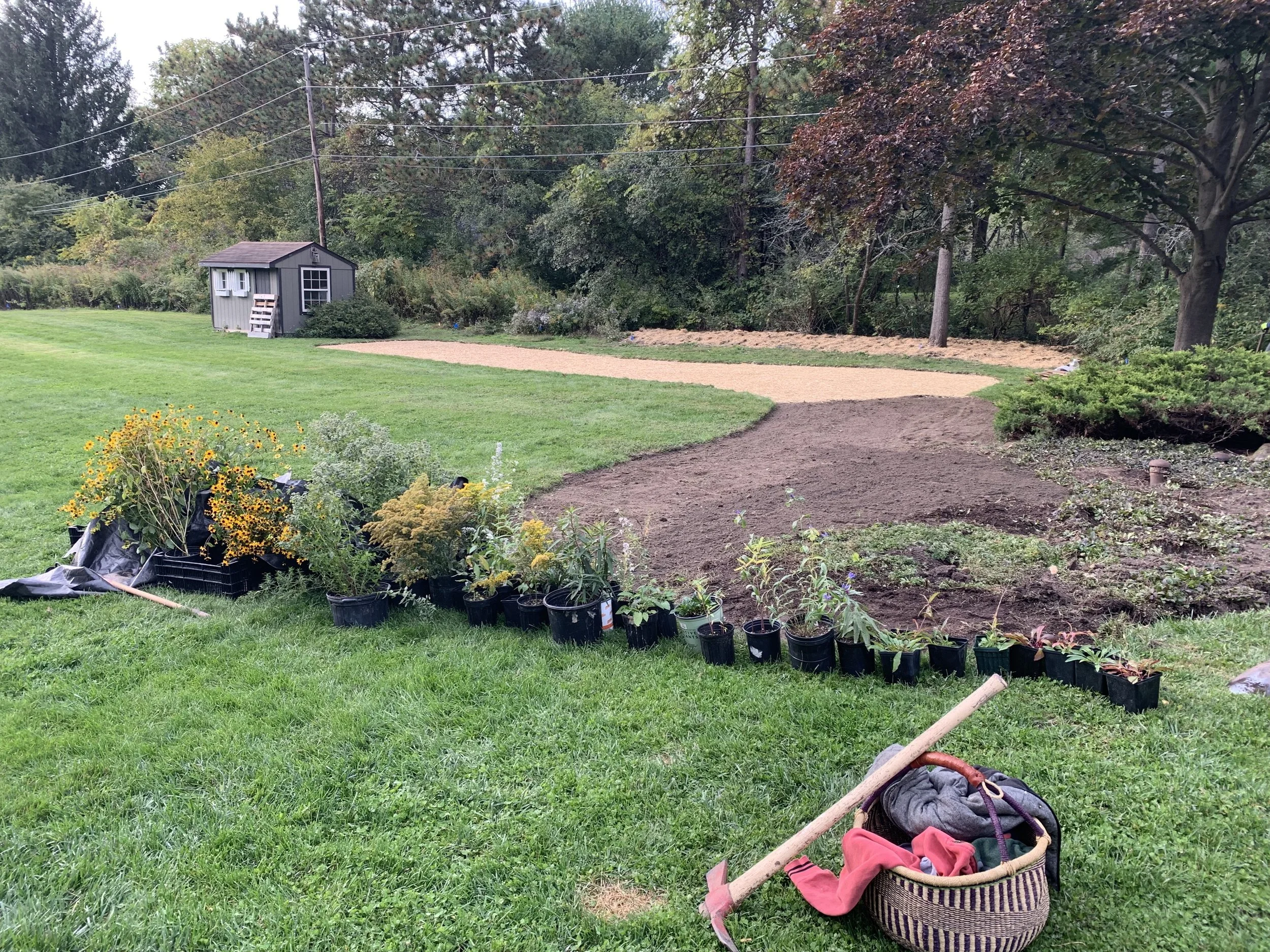


The Restoration Science Center (SUNY ESF), specifically Professor Sam Quinn, provided GNP onsite training and guidance on how to make meadows.. RSC’s Lawn to Meadow Pocket Guide is a super resource. If you are interested in DIY meadows and gardens this guide will help you.
See Why install a meadow and/or an ecologically functional garden?
See How to manage a meadow and/or an ecologically functional garden?
Part 1: Why are they essential? — Part 2: How to install? — Part 3: How to manage?